Renaissance era (1400s to early 16th Century):
 - A voluptuous body was in fashion, as we can see from the paintings of the time
- These women in today's standards would be considered overweight
- "Blondes have more fun" stemmed from this era, as light haired women were considered better than darker haired women
- Pale, ivory skin was the make up trend of the time, with deep, red lips, achieved using vermilion (red or scarlet pigment made from the powdered mineral cinnabar)

Victorian era (1837 - 1901):
- highly body conscious
- tiny waistlines achieved through wearing a corset. Women suffered broken ribs and breathing difficulties to achieve the ideal 12 inch waist
- layered petticoats, hoops and bustles all emphasized the bum and hips, making the waist appear smaller too
 - high class women wore very minimal make up, as bold colours were reserved for prostitutes. Some religions even associated beauty products with the devil
Edwardian era (1901 - 1910)
- same corsets as the Victorian era
- more flowing skirt, emphasized the bum but went slightly inwards at the knees and then sharply outwards at the hem, often with a sweeping train
- due to the S-bend corset, women often lent on a long handled parasol or fashionable cane
- breasts pushed together as a "mono-bosom"

The Roaring 20s:
- women hid their curves
- some would bind their chests with strips of cloth to achieve boyish figure
- short and swingy flapper dress
- elastic webbed girdles replaced corsets to flatten the abdomen
- short hair was in fashion, bob or finger wave
- bold make up was now popular rather than trashy; face was powdered to make it as pale as possible, eyebrows lifted and pencilled in to be thin and bold, kohl pencil used to line and define the eye
- Chanel designs little black dress
The age of Hollywood (30s and 40s):
 - women became more body conscious and paid a lot more attention to what they ate
- arms and legs accented, women started lifting light weights to build muscle tone
- new padded stretch cotton bra introduced
- Chanel, Dior and Elsa Schiaparelli started designing more fitted, glamorous attire
- Hairstyles became more feminine; hair colour varied depending on which movie star was the favourite at the time
- Jean Harlow popularized platinum blond, Rita Hayworth promoted her striking red hair and Marlene Dietrich represented brunettes
- make up became less bold, and women began to opt for foundation closer to their natural skin tones
The conservative 50s:
 - women desired an hourglass figure, pinched in waist with fuller bust and large hips
- Stars like Marilyn Monroe and Grace Kelly were popular
- Women were taught that their primary aim was to attract a man and have a family, so dress to allure
- they rarely showed a lot of skin, despite dressing to get a man
- lots of petticoats underneath the skirt to create a full skirt
- large belts around the middle to define the waist
- short sleeves or cardigans worn to balance out the hips with the appearance of a larger bust and wide shoulders
- hair was worn short, just below the shoulders, in soft, curly or wavy styles
- women wanted flawless skin, a peaches and cream complexion
The swinging 60s:
 - women wanted to look like Twiggy, thin as a stick, defined eyes with eye liner and mascara
- 2 polar opposites in fashion styles: hippie flower child and modern 60's woman
- Hippie: emphasis on peace and freedom, bell bottoms, tunics, platform shoes, back to nature style, long, no maintenance hair styles, avoidance of make up
- mod: mini skirt, matching sets in bright colours, shift dresses, knitwear, high boots, crop hair styles, fake eye lashes and tonnes of mascara
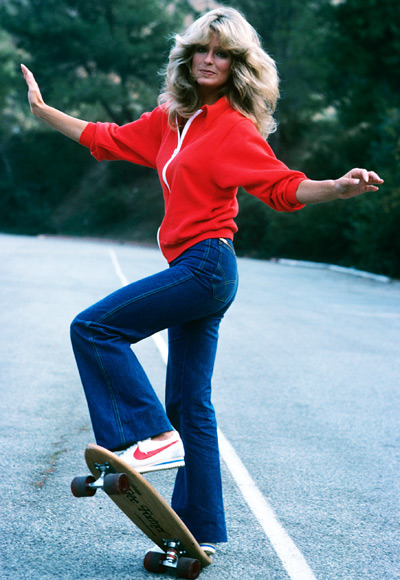
Disco 70s:
- women were still preoccupied with being skinny, and by the 70s, the thinking thin phenomenon was in full force
- clothing was sexy and disco ready
- wrap style dresses, oversized sunglasses, high waist jeans
- women wanted the ultra glam 'Studio 54' look, made popular by Bianca Jagger
- Farrah Fawcett hair: long, layered, feathery
- bronzed, beach look for skin, tanning booth trend
The 80s:
- aerobics craze emphasized fitness for women
 - women should maintain a certain weight, but appear toned yet not too muscular
- eating disorder figures sky rocketed during this decade
- OTT fashion: neon suits with football player-sized shoulder pads, spandex
- 80s hair, "the bigger the better" mantra, lots of hair spray
- OTT make up, brighter colours, popular blue eye shadow and liner, shiny pink lips
- Bushy eyebrows were considered very sexy, thanks to Brooke Shields
The 90s:
- Models like Kate Moss further inspire the idea of extreme thinness, along with minimalist make up
- Heroin chic trend
 - Grunge movement: flannel shirts, Doc Martens, an overall unkempt look
- spandex and the fluorescent colours of the 80s fashion stuck around for the first part of the 90s, obvious in the shows Beverly Hills and 90210
- lycra introduced
- midriff bearing tops became popular, along with belly button piercings and toned stomachs
- a popular hairstyle was the "Rachel" cut, from Jennifer Aniston's charachter on "Friends"
- other popular hair styles were the bob, bangs (Brenda Walsh) and bleach blonde colour (Donna Martin)
 The New Millennium:
- we have more choice than ever before about our bodies, yet we still seem to aspire to be extremely thin
- now, the price of beauty is extremely high
- there's been a surge in plastic surgeries
- comebacks of past fashion trends, from pinched in waists to shoulder pads
- new trends such as low rise jeans and juicy sweat suits
- there doesn't seem to be a specific hair cut or make up style for this decade
2010 to now:
Well, what can I say? The website I've been using was obviously written a good few years ago, as things have certainly changed a bit since juicy sweat suits! But honestly, what has been the fashion over the past 5 years? It's hard to say, as we can't really look back with unbiased eyes yet, but having grown up through the new millennium, I couldn't really say what the trend was through the 00s. I was either in children's clothes or a teen following the short lived fashion of the month, and my parents aren't exactly stylish...neither is Retford for that matter!
I was born in 1996 so I suppose I started choosing my own clothes and developing my own style at age 10 maybe? So that would make the year 2006, and all I can really remember about my fashion choices were that I thought wearing clothes in colours that matched was cool...it was not. However, in the 50s / 60s, wearing a matching set was actually a trend, so I would have fitted right in. I went through a bit of a goth stage (who didn't?), but I think that was just to break up my massively girly wardrobe! I think I started disliking pink around age 10, and blue (through varying shades) has undoubtedly been my favourite colour since. But now, age 19, I'm still developing my own style. I like to dress a little 40s / 50s sometimes, as I feel the style compliments my body shape the best, however it' a hard style to wear every day when you're doing an art course (splatter paint + nice clothes = bad idea). I love the rockabilly style too, a modern interpretation on the 50s look, but I don't have tattoos and peircings and I'm not rebel enough for that :( plus, my hair wouldn't take the bright colours that come with the rockabilly style.
I also like the 60s style, which I'm hoping I'll be able to develop at uni, where I can dress as wacky as I want and no one will bat an eye lid :D
I guess my style will continue to change throughout my life; I'd rather not live in jeans and t shirts all my life, though they are pretty comfy and I probably will end up doing exactly that :/
Anyway, back to general fashion. At the moment there seems to be loads of girls wearing either ankle grazer skinny jeans or leggings, crop tops, leather jackets and nike trainers. It's almost like it's a uniform! Hipster is the current style I guess, for people who are bored with the mainstream fashion so decide to create their own, so it could basically be anything! Here's a pretty good picture to explain it.

Body shape wise, currently, the ideal is to have a thigh gap, skinny torso and cheekbones. Basically everything people think they can achieve through an eating disorder. These disorders have steeply inclined over the past few years and there doesn't seem to be enough help out there, or people just aren't taking it. All you have to do is go on instagram and type in some hashtag about being skinny or depressed and you get a whole heap of imagery of young girls and boys doing "body checks", where they show their progress and tell about their current feelings, and each egg each other on, further promoting the issues. Social media is no doubt massively to blame for the huge increase in eating disorders and mental health issues nowadays, but there's little any one person can do to stop it. You may have noticed that a lot of my work recently has been directed towards social media's negative view of beauty and mental health. I guess, in a way, I'm trying to raise awareness and do my own little bit to change something, even if it's just one person's opinion of themselves. It really saddens me to see the posts on instagram, but somehow I can't stop looking through them, almost as if I'm looking for a glimmer of hope that there is one person actually winning their fight with anorexia or another mental health disorder. We're not doing enough to help people with mental health issues, but at the end of the day, you can't help someone that doesn't want to be helped. Anorexia is an issue close to my own heart after trying to help my best friend through it around age 14/15, and in my eyes, failing her. She's better now, but we aren't in contact, and it disappoints me every day that I have never made the effort to contact her, but I feel it might be too hard, and I wouldn't want to bring back any memories from the days of her suffering. I feel selfish for playing the "poor me" card, as she was the one who was losing control of her life, but I wasn't coping as the only one who knew, trying to help her but keep myself afloat also. I suppose I want to help fight mental health disorders as a way of making up for failing my friend, despite the fact she is alive and well. But seeing her facebook posts and how happy she seems, I don't want anyone else to die when they could be saved and have their happiness back!!
Okay, this has gone way too deep...I'm contemplating even posting this :/
I guess it's all part of my journey though, not that I'll get extra marks for it haha
Well anyway, I guess my point is that art should mean something to you, otherwise what's the point?
Okay, this needs to end now...bye xox
- aerobics craze emphasized fitness for women
- women should maintain a certain weight, but appear toned yet not too muscular- eating disorder figures sky rocketed during this decade
- OTT fashion: neon suits with football player-sized shoulder pads, spandex
- 80s hair, "the bigger the better" mantra, lots of hair spray
- OTT make up, brighter colours, popular blue eye shadow and liner, shiny pink lips
- Bushy eyebrows were considered very sexy, thanks to Brooke Shields
The 90s:
- Models like Kate Moss further inspire the idea of extreme thinness, along with minimalist make up
- Heroin chic trend
- Grunge movement: flannel shirts, Doc Martens, an overall unkempt look- spandex and the fluorescent colours of the 80s fashion stuck around for the first part of the 90s, obvious in the shows Beverly Hills and 90210
- lycra introduced
- midriff bearing tops became popular, along with belly button piercings and toned stomachs
- a popular hairstyle was the "Rachel" cut, from Jennifer Aniston's charachter on "Friends"
- other popular hair styles were the bob, bangs (Brenda Walsh) and bleach blonde colour (Donna Martin)
The New Millennium:- we have more choice than ever before about our bodies, yet we still seem to aspire to be extremely thin
- now, the price of beauty is extremely high
- there's been a surge in plastic surgeries
- comebacks of past fashion trends, from pinched in waists to shoulder pads
- new trends such as low rise jeans and juicy sweat suits
- there doesn't seem to be a specific hair cut or make up style for this decade
2010 to now:
Well, what can I say? The website I've been using was obviously written a good few years ago, as things have certainly changed a bit since juicy sweat suits! But honestly, what has been the fashion over the past 5 years? It's hard to say, as we can't really look back with unbiased eyes yet, but having grown up through the new millennium, I couldn't really say what the trend was through the 00s. I was either in children's clothes or a teen following the short lived fashion of the month, and my parents aren't exactly stylish...neither is Retford for that matter!
I was born in 1996 so I suppose I started choosing my own clothes and developing my own style at age 10 maybe? So that would make the year 2006, and all I can really remember about my fashion choices were that I thought wearing clothes in colours that matched was cool...it was not. However, in the 50s / 60s, wearing a matching set was actually a trend, so I would have fitted right in. I went through a bit of a goth stage (who didn't?), but I think that was just to break up my massively girly wardrobe! I think I started disliking pink around age 10, and blue (through varying shades) has undoubtedly been my favourite colour since. But now, age 19, I'm still developing my own style. I like to dress a little 40s / 50s sometimes, as I feel the style compliments my body shape the best, however it' a hard style to wear every day when you're doing an art course (splatter paint + nice clothes = bad idea). I love the rockabilly style too, a modern interpretation on the 50s look, but I don't have tattoos and peircings and I'm not rebel enough for that :( plus, my hair wouldn't take the bright colours that come with the rockabilly style.
I also like the 60s style, which I'm hoping I'll be able to develop at uni, where I can dress as wacky as I want and no one will bat an eye lid :D
I guess my style will continue to change throughout my life; I'd rather not live in jeans and t shirts all my life, though they are pretty comfy and I probably will end up doing exactly that :/
Anyway, back to general fashion. At the moment there seems to be loads of girls wearing either ankle grazer skinny jeans or leggings, crop tops, leather jackets and nike trainers. It's almost like it's a uniform! Hipster is the current style I guess, for people who are bored with the mainstream fashion so decide to create their own, so it could basically be anything! Here's a pretty good picture to explain it.
Body shape wise, currently, the ideal is to have a thigh gap, skinny torso and cheekbones. Basically everything people think they can achieve through an eating disorder. These disorders have steeply inclined over the past few years and there doesn't seem to be enough help out there, or people just aren't taking it. All you have to do is go on instagram and type in some hashtag about being skinny or depressed and you get a whole heap of imagery of young girls and boys doing "body checks", where they show their progress and tell about their current feelings, and each egg each other on, further promoting the issues. Social media is no doubt massively to blame for the huge increase in eating disorders and mental health issues nowadays, but there's little any one person can do to stop it. You may have noticed that a lot of my work recently has been directed towards social media's negative view of beauty and mental health. I guess, in a way, I'm trying to raise awareness and do my own little bit to change something, even if it's just one person's opinion of themselves. It really saddens me to see the posts on instagram, but somehow I can't stop looking through them, almost as if I'm looking for a glimmer of hope that there is one person actually winning their fight with anorexia or another mental health disorder. We're not doing enough to help people with mental health issues, but at the end of the day, you can't help someone that doesn't want to be helped. Anorexia is an issue close to my own heart after trying to help my best friend through it around age 14/15, and in my eyes, failing her. She's better now, but we aren't in contact, and it disappoints me every day that I have never made the effort to contact her, but I feel it might be too hard, and I wouldn't want to bring back any memories from the days of her suffering. I feel selfish for playing the "poor me" card, as she was the one who was losing control of her life, but I wasn't coping as the only one who knew, trying to help her but keep myself afloat also. I suppose I want to help fight mental health disorders as a way of making up for failing my friend, despite the fact she is alive and well. But seeing her facebook posts and how happy she seems, I don't want anyone else to die when they could be saved and have their happiness back!!
Okay, this has gone way too deep...I'm contemplating even posting this :/
I guess it's all part of my journey though, not that I'll get extra marks for it haha
Well anyway, I guess my point is that art should mean something to you, otherwise what's the point?
Okay, this needs to end now...bye xox